
What Is Golden Hour Dog Photography?
Why the hour before sunset is pure magic for dog photos.
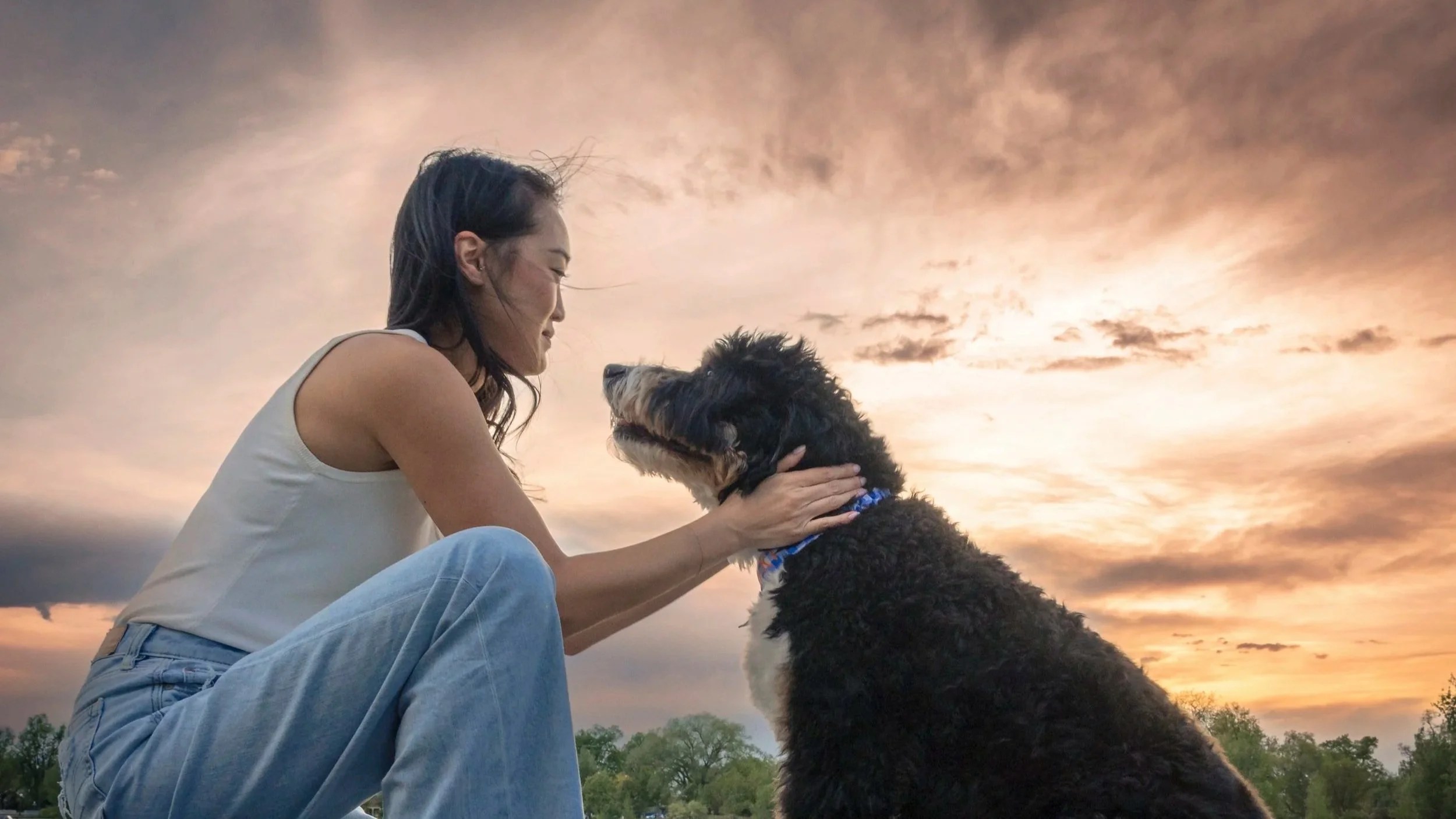
Let's talk about golden hour dog photography. Not the candle-scented, Pinterest-board version of golden hour. The actual, physics-of-light version. Because once you understand why golden hour dog photography works the way it does, you'll understand exactly why I built an entire specialty session around it and why your dog's midday backyard photos will never quite hit the same after you know this.
What Is Golden Hour Dog Photography, Really?
Golden hour itself is simple. It's the short window right after sunrise or right before sunset when the sun sits low on the horizon instead of straight overhead. During that window, the light gets softer, warmer, and way more forgiving than it is at noon.
No harsh shadows carving out under the eyes. No squinting. No blown-out highlights on light-colored fur. Just that warm, glowy, everything-looks-a-little-more-cinematic light. Photographers have been chasing this window forever. There's a reason it's also called the "magic hour."
It's not a filter. It's not editing.
It's just what light does when the sun gets low enough in the sky, and it's the single biggest variable separating a photo that feels flat from one that feels alive. Golden hour dog photography takes that same principle and points it at the subject who benefits from it more than almost anyone else: your dog.
Why Golden Hour Dog Photography Looks So Different From a Regular Photo
Here's the thing nobody tells you about midday dog photos: your dog is squinting, the light is flat, and the grass looks the same shade of green it does in literally every other photo on your camera roll.
Nothing pops. Nothing feels special.
You could take a hundred photos at 1pm, and they'd all have the same slightly harsh, slightly forgettable quality.
Golden hour flips that completely. The light comes in low and warm, which means edges catch fire a little (in the best way), fur gets this glowing rim of light around it, and the whole scene starts to feel like a moment instead of a snapshot.
A regular dog photo says "here's my dog." Golden hour dog photography says "here's my dog, and also here's a feeling." That difference is not subtle once you see it side by side. It's the difference between a photo you scroll past and a photo you actually print.
The Silhouette Effect: Golden Hour Dog Photography's Best Kept Secret
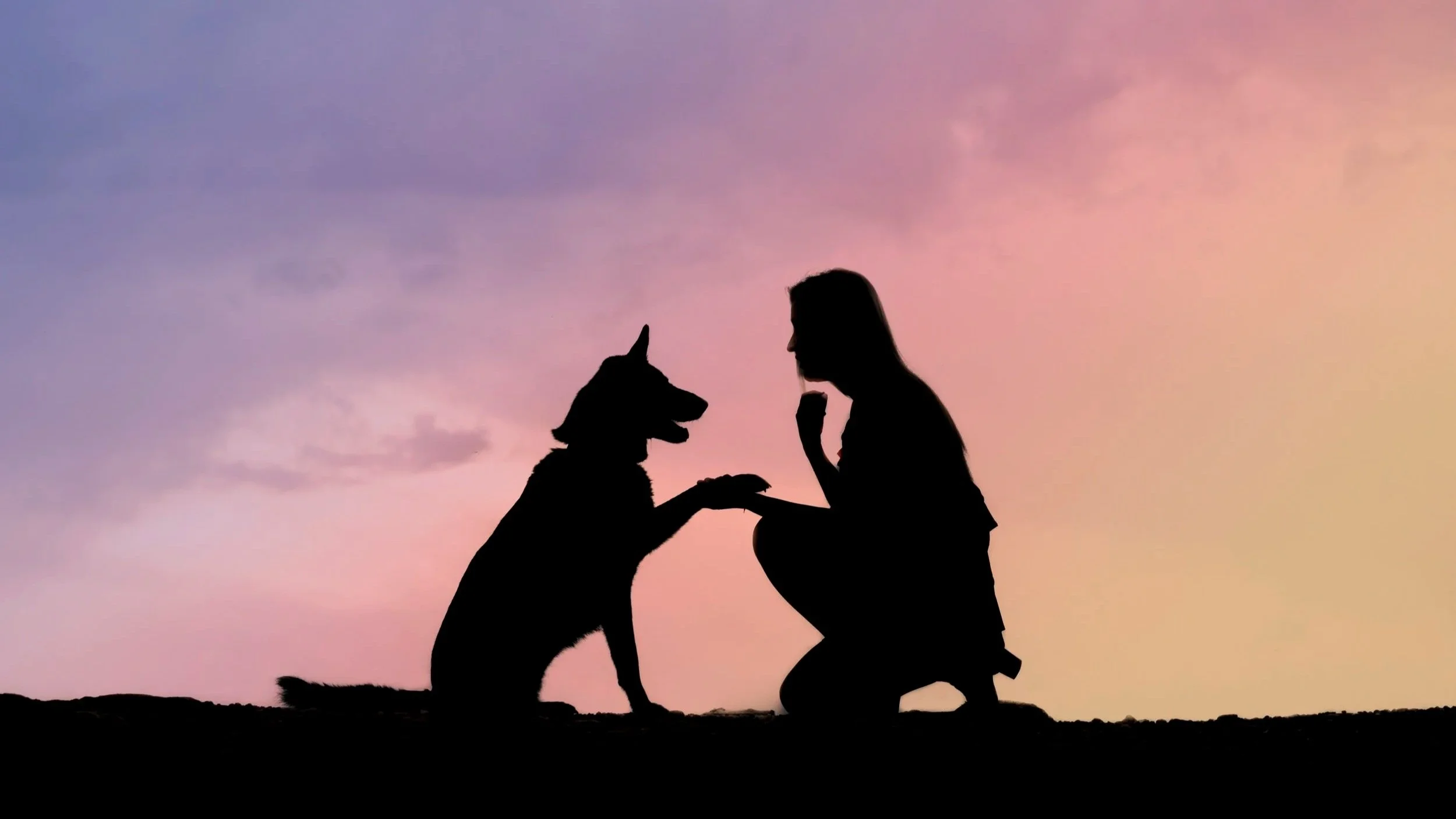
This is exactly why silhouettes work so well during golden hour and basically nowhere else. When you shoot toward that low sun, your subject goes fully dark against a sky doing all the work.
No detail competing for attention. Just shape, emotion, and color. It's dramatic in a way a regular photo just can't be, no matter how good your camera is.
You genuinely cannot fake this at noon. There's no editing trick, no filter, no preset that recreates a true silhouette against a real, glowing sky. The sun has to be low enough, and the light has to be behind your dog, not in front.
That's it. That's the whole trick, and it only exists in this one small window.
What to Know Before a Golden Hour Dog Photography Session
If you're prepping for a session, a few small things make a real difference:
Timing matters more than you'd think. The window is short, usually somewhere between 30 and 40 minutes depending on the season and where you are. Showing up even 10 minutes late can mean missing the best light entirely.
Solid colors and simple silhouettes photograph better than busy patterns. Since silhouette photography is about shape, not detail, a dog's outline reads more clearly than any bandana or harness pattern will, so don't stress over matching outfits.
A little restlessness is normal, and totally fine. Dogs pick up on excitement and new environments. A good golden hour session builds in time for your dog to settle in before the real shooting starts.
Weather isn't always a dealbreaker. Partial cloud cover can actually add drama to a silhouette instead of ruining it. Full overcast is trickier since there's less of a strong light source to backlight against, but it's not automatically a wash.
Why I Built Silhouette Sunset Sessions Around Golden Hour
I didn't pick golden hour because it sounded pretty in a caption. I picked it because it's the only time of day this specific kind of photo is even possible. You can't fake a silhouette at noon. You can't recreate that warm, dramatic sky in a studio. It only exists in this one small window, which is exactly why these sessions only run for two days this September.
If you've been thinking about getting a photo of your dog that actually belongs on your wall instead of buried in your camera roll, this is the light that makes that happen. Six spots are open at the time of this writing for September 25 and 26, and once they're gone, this exact kind of session won't run again until next year.
Curious what a session actually looks like start to finish? Click to learn about the Experience.
People Also Ask
What time does golden hour actually start? It shifts daily depending on your location and the season, so there's no fixed clock time. As a rule of thumb, it's roughly the 30 to 60 minutes before sunset (or after sunrise). Golden hour timing depends heavily on latitude and the time of year, so it really does move around throughout the year, and here in the mountains, the placement of a ridge could cause shade before the actual sunset.
Can you get golden hour dog photography on a cloudy day? Sometimes, and when it’s right, it can look incredible. Clouds diffuse the light even more and can add drama to a silhouette instead of ruining it. Full, flat overcast is trickier since there's no strong light source to backlight against, but partial cloud cover is often a bonus and not a problem.
Why do professional photographers care so much about this specific hour? Because the light during golden hour is softer and more even, which makes it far more forgiving and flattering than direct overhead sun. It's not a style choice, it's a lighting condition that's genuinely easier to work with and harder to mess up.
Is golden hour the same thing as "blue hour"? It is not, and they're actually opposite in feel. Golden hour is warm and orange-toned, and it happens right at sunrise or sunset. Blue hour comes just before or after that, when the sun has dipped further below the horizon, and everything shifts toward a cooler, blue-toned light instead. It is also known as Twilight.
Do I need a professional photographer for golden hour dog photography, or can I do it myself? You can absolutely try it yourself, and it's a fun thing to attempt on your own with a phone. But getting a true silhouette, with the exposure, angle, and timing all lined up against a dramatic sky, takes practice, the right location, and the right gear to nail consistently. That gap is exactly why sessions like this exist.
Ready to Book Your Session?
If it’s late summer or coming up on Autumn, click the button below to see if a Silhouette Sunset Session is available. If it’s any other time of the year, these limited sessions aren’t open yet, so feel free to get in touch to talk about a full session for your pup.
Give Your Pet Their Portrait Moment
If you've read this far, you already feel it. Your pet has a whole personality. A whole thing about them. And you've probably been meaning to get proper photos done for longer than you'd like to admit. Head over to the session experience guide to see what a Crimson Cat Studios session actually looks like from start to finish. Or, if you're the type who'd rather just ask questions, get in touch directly. I'd genuinely love to hear about your pet.